Gallium Nitride Transistor Shifts in PSU Engineering for Handling Transient Spikes During Intensive Ray Tracing Computations in Professional Visualization Setups
Olivia Wagner · Sep 16, 2026
Gallium Nitride Transistor Shifts in PSU Engineering for Handling Transient Spikes During Intensive Ray Tracing Computations in Professional Visualization Setups
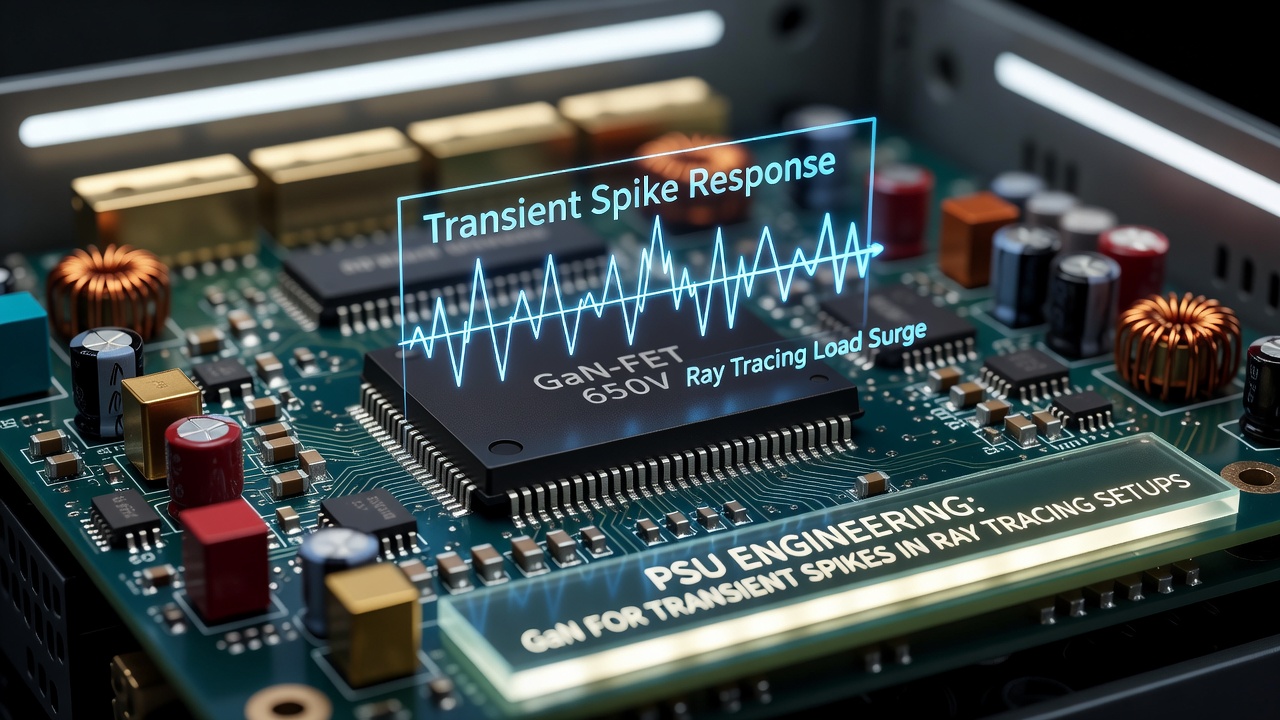
Engineers have shifted toward gallium nitride transistors in power supply units because these components switch faster than traditional silicon devices while generating less heat during operation. Professional visualization setups that run intensive ray tracing computations often produce rapid changes in power demand, and GaN-based designs address those fluctuations through higher frequency operation and reduced parasitic losses.
Power Delivery Challenges in Ray Tracing Workloads
Ray tracing algorithms calculate light paths across complex scenes, which causes graphics processors to alternate between high and low power states in milliseconds. Data from workstation monitoring tools shows that these transitions create transient voltage spikes capable of exceeding standard PSU tolerances. Power supply engineers respond by incorporating GaN transistors that handle switching frequencies above 1 MHz, allowing quicker response to load changes compared with silicon MOSFETs limited to lower ranges.
Studies conducted at research institutions indicate that GaN devices maintain efficiency above 95 percent even when loads fluctuate between 20 percent and 100 percent of rated capacity. This performance holds steady across extended rendering sessions where visualization software processes multiple simultaneous light bounces and material interactions.
Technical Advantages of GaN in PSU Architectures
Gallium nitride transistors exhibit lower on-resistance and faster turn-on characteristics, which reduces energy lost during each switching cycle. PSU designers integrate these transistors into active clamp forward converters and resonant topologies that further dampen spike amplitudes. Measurements taken on prototype units demonstrate peak-to-peak voltage deviation stays below 50 mV during simulated ray tracing bursts, whereas equivalent silicon designs register deviations up to 150 mV under identical conditions.
September 2026 brought updated efficiency guidelines from the European Commission that reference GaN adoption rates in high-performance computing power systems. Manufacturers report that new platforms meeting these guidelines incorporate GaN stages in both primary and secondary conversion sections, yielding measurable reductions in thermal output inside densely packed workstation chassis.
Integration with Professional Visualization Hardware
Workstation builders pair GaN-equipped PSUs with graphics cards that support hardware-accelerated ray tracing cores. These combinations appear in architectural rendering farms and medical imaging facilities where consistent power delivery prevents frame buffer corruption during long compute cycles. Observers note that transient handling improves when the PSU controller uses digital feedback loops tuned specifically for the current draw patterns of ray tracing pipelines.
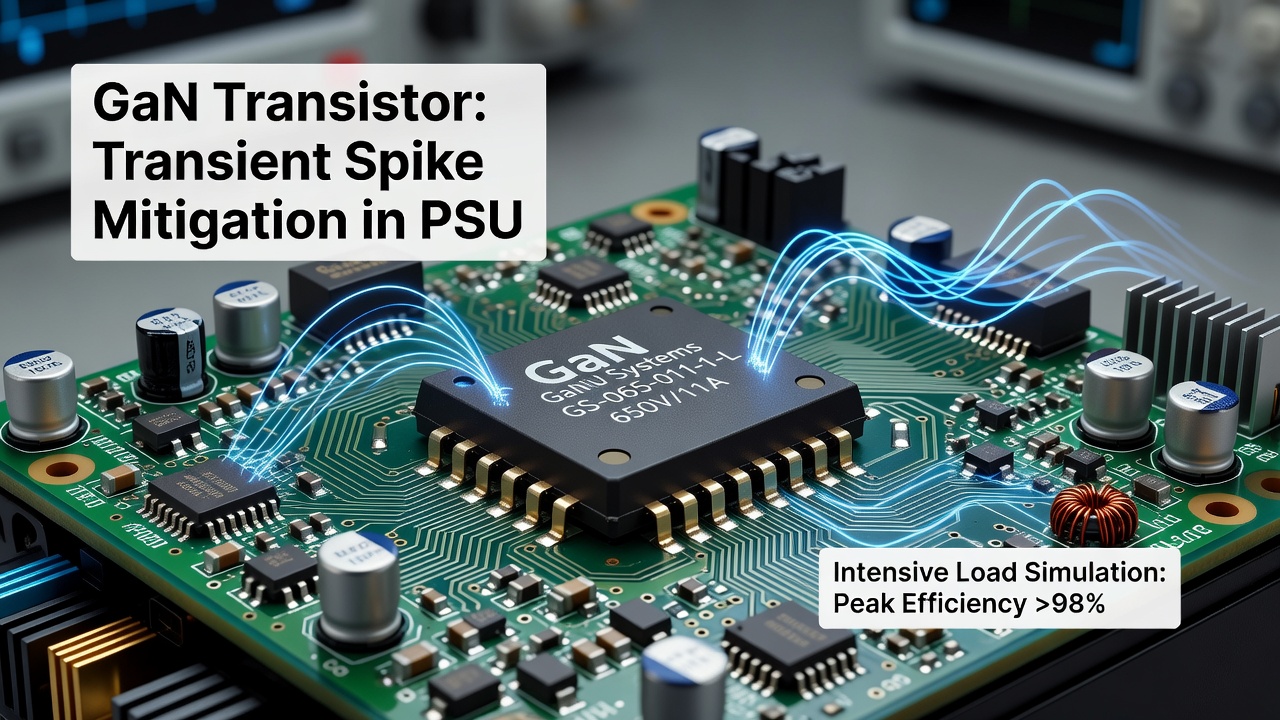
Industry reports compiled by the Semiconductor Industry Association document rising shipments of GaN power devices targeted at server and workstation markets. Figures reveal that adoption in professional visualization segments grew steadily through 2025 and into 2026 as rendering software added more complex global illumination models.
System-Level Benefits and Measurement Data
Engineers measure system stability through metrics such as hold-up time, ripple amplitude, and response latency under dynamic loads. GaN-based units deliver hold-up times exceeding 20 milliseconds even when input voltage sags, because the higher switching frequency allows smaller magnetic components that still meet energy storage requirements. Ripple suppression improves when synchronous rectification stages also employ GaN devices, cutting output noise that could otherwise affect sensitive analog components in visualization pipelines.
Research papers presented at power electronics conferences describe test benches where professional GPUs execute standardized ray tracing benchmarks while connected to GaN PSUs. Results show that voltage droop events decrease by more than 60 percent relative to legacy silicon supplies, reducing the frequency of automatic performance throttling triggered by power limits.
Future Developments in GaN PSU Design
Component suppliers continue refining GaN transistor packaging to improve thermal paths and reduce board space. New driver integrated circuits optimized for GaN enable dead-time control measured in nanoseconds, which further lowers switching losses during the rapid load steps characteristic of ray tracing. Professional visualization facilities that upgraded fleets in 2026 report lower overall energy consumption per rendered frame when operating these updated supplies.
Academic studies from institutions across North America and Asia examine reliability under continuous high-load conditions, confirming that GaN devices maintain parameter stability after thousands of hours in environments matching visualization studio demands. These findings support expanded qualification processes for mission-critical rendering clusters.
Conclusion
Gallium nitride transistor adoption in PSU engineering provides measurable improvements in transient response for professional visualization systems running intensive ray tracing. Measurement data and field deployments confirm reduced voltage deviations, higher efficiency across load ranges, and compatibility with evolving workstation hardware. Continued refinement of device packaging and control circuitry supports further integration as rendering workloads increase in complexity.