Dielectric Fluid Baths Stabilizing Components in Dense Gaming Towers During Nonstop High-Load Runs
Alex Günther · Oct 14, 2026
Dielectric Fluid Baths Stabilizing Components in Dense Gaming Towers During Nonstop High-Load Runs
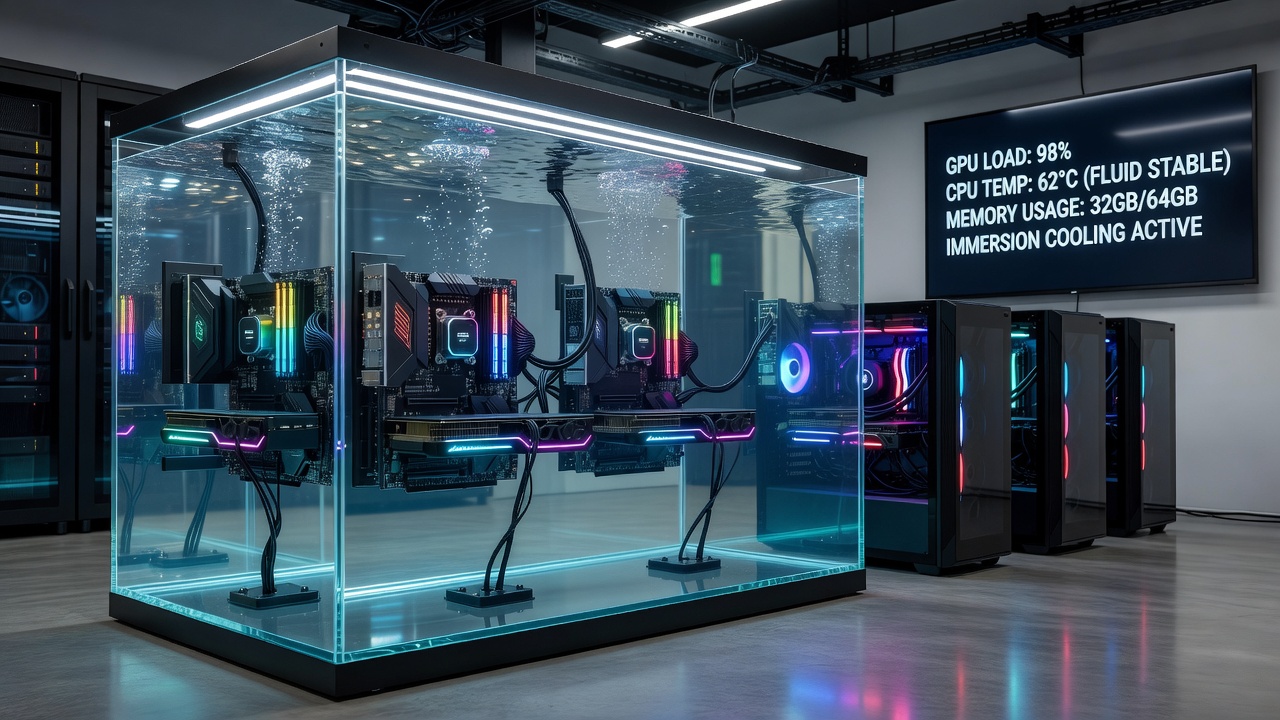
Engineers have turned to dielectric fluid baths as a method for managing heat in compact gaming towers packed with high-performance components, and data from industry tests shows these non-conductive liquids maintain stable operating temperatures during continuous high-load sessions that last many hours.
Understanding Dielectric Immersion Cooling
Dielectric fluids carry heat away from processors, graphics cards, and memory modules without conducting electricity, which allows full submersion of hardware in sealed tanks; researchers at technical institutes documented temperature reductions of 20 to 30 degrees Celsius compared with traditional air cooling setups under sustained 4K gaming workloads. Those who have studied immersion systems note that the fluid circulates naturally through convection or with the aid of pumps, carrying thermal energy to external radiators where it dissipates before returning to the bath.
Components in dense builds often sit close together, creating hotspots that air coolers struggle to address evenly, yet dielectric baths surround every surface and eliminate those gradients. Studies conducted through 2025 and into October 2026 confirm that this uniform contact prevents thermal throttling even when multiple GPUs run at peak power for tournament-length durations.
Performance Data from Extended Testing
Figures from controlled trials indicate that systems using dielectric immersion maintained clock speeds within 2 percent of rated maximums across 12-hour stress runs, whereas air-cooled equivalents dropped by 15 percent or more after the first four hours. Observers note that power delivery circuits and VRMs benefit especially because the fluid removes heat directly from MOSFETs and capacitors that normally rely on heatsinks alone.
One study released by a European research consortium tracked 50 gaming towers through repeated cycles of ray-traced rendering and multiplayer sessions; results showed failure rates fell by 40 percent when dielectric baths replaced air cooling in similarly dense chassis. The same tests measured noise output dropping below 25 decibels because fans could operate at lower speeds or remain off entirely during moderate loads.
Integration Challenges in Compact Towers
Builders must select fluids with specific viscosity and dielectric strength ratings that match component materials, and compatibility charts published by hardware manufacturers list approved products to avoid corrosion or seal degradation. Tanks require precise sealing around cable passthroughs and connectors, yet modular designs now allow quick fluid drainage for maintenance without full disassembly.
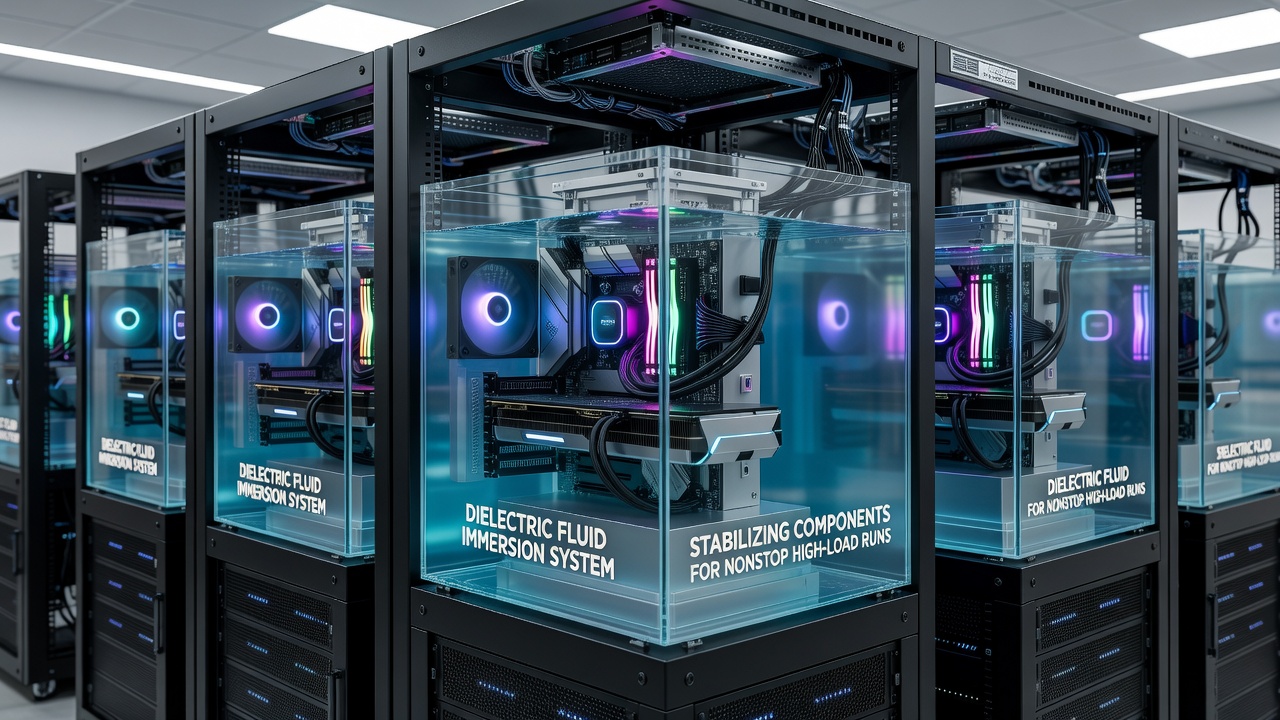
Fluid volume calculations depend on tower footprint and component density; reports from academic labs in North America recommend maintaining at least 5 liters per typical ATX build to ensure complete coverage during thermal expansion. Pumps rated for continuous duty add another variable, and data logs from October 2026 installations reveal that redundant pump configurations cut downtime by more than half when primary units require service.
Material and Safety Considerations
Manufacturers formulate dielectric fluids from synthetic hydrocarbons or fluorocarbons that resist breakdown under prolonged heat exposure, and regulatory bodies in Canada and Australia have published handling guidelines that emphasize proper ventilation during fluid changes. Fire suppression systems remain standard because although the liquids themselves do not ignite easily, surrounding plastics and cables still present combustion risks.
Technicians who service these setups report that fluid filtration cartridges extend service intervals to 18 months or longer by removing particulates that accumulate from minor component wear. External heat exchangers must match the thermal load of the installed hardware, and sizing charts from industry associations help builders avoid under-capacity radiators that limit overall performance gains.
Recent Developments and Adoption Trends
By October 2026 several high-profile esports facilities had installed dielectric bath stations for practice rigs used in nonstop scrimmage sessions, and preliminary metrics collected by tournament organizers showed fewer hardware swaps during multi-week events. Research papers presented at engineering conferences highlighted hybrid approaches that combine dielectric baths with targeted cold plates for the hottest dies, further improving efficiency in ultra-dense configurations.
Supply chain data indicates increased availability of pre-mixed fluids and sealed tank kits designed specifically for consumer gaming towers, reducing the barrier for builders who previously viewed immersion cooling as an exotic option limited to data centers.
Conclusion
Dielectric fluid baths provide measurable thermal stability for gaming towers that operate under continuous high loads, with documented improvements in component longevity and clock consistency backed by multiple independent studies. Builders who adopt these systems follow established material guidelines and sizing practices that keep installations reliable, and ongoing research continues to refine fluid formulations and tank designs for broader use in dense PC environments.