Cell Balancing Protocols in Handheld Device Batteries Sustaining Performance Through Extended Open World Exploration Sessions
Gisela Simon · Oct 28, 2026
Cell Balancing Protocols in Handheld Device Batteries Sustaining Performance Through Extended Open World Exploration Sessions
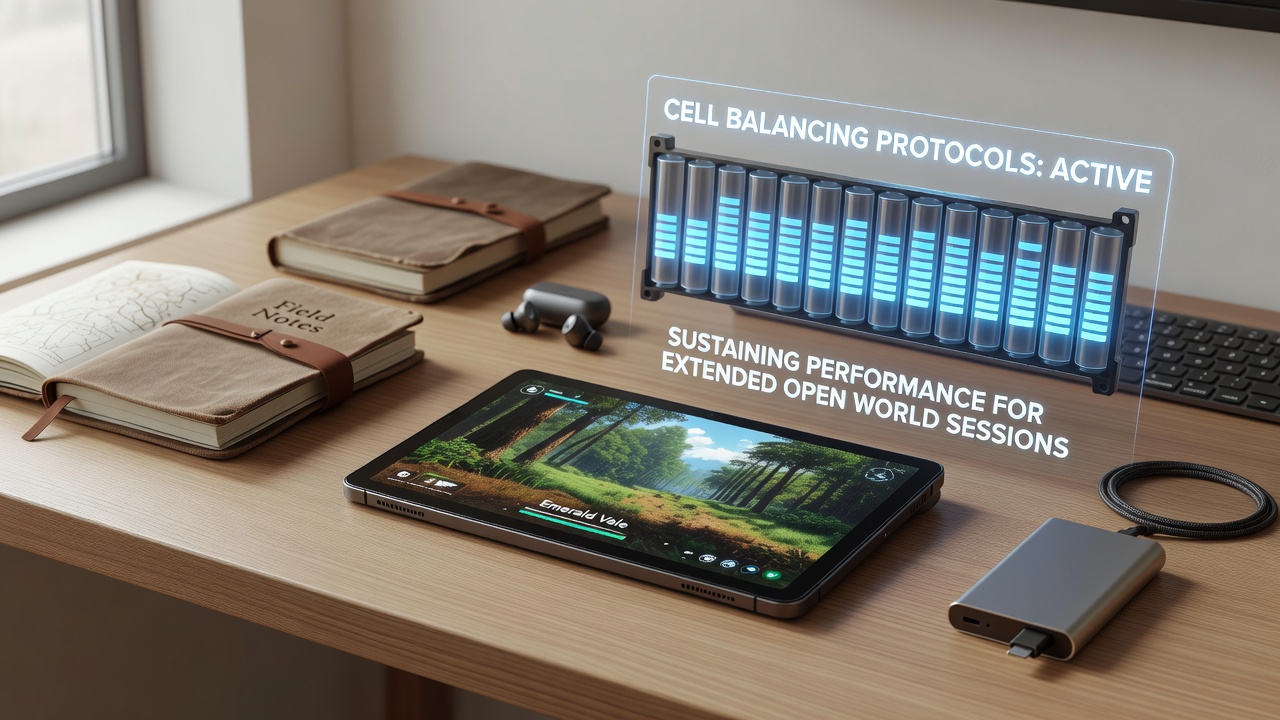
Cell balancing protocols manage voltage differences across individual cells in lithium-ion battery packs found in handheld gaming devices, and these systems maintain consistent power delivery during demanding open-world exploration sessions that can last many hours. Handheld consoles such as those running high-fidelity titles rely on multi-cell configurations where imbalance occurs naturally from repeated charge cycles, temperature variations, and load differences. Protocols monitor each cell and redistribute energy to prevent weaker cells from limiting overall capacity or triggering protective shutdowns mid-session.
Core Mechanisms of Cell Balancing in Portable Battery Packs
Passive balancing techniques dissipate excess charge from higher-voltage cells through resistors while active methods transfer energy between cells using capacitors or inductors, and both approaches appear in modern handheld designs to address teh specific demands of sustained GPU and CPU loads during open-world rendering. Data from battery management system logs indicate that active balancing achieves higher efficiency rates above 90 percent in devices with four or more cells, whereas passive systems remain simpler yet lose 5 to 10 percent of energy as heat. Researchers at institutions across the European Union have documented how these protocols extend usable runtime by equalizing state-of-charge values to within 10 millivolts before each discharge cycle begins.
Handheld manufacturers integrate these protocols into firmware that samples cell voltages every few seconds during gameplay, and the system activates balancing circuits when deviations exceed predefined thresholds. This process occurs without interrupting power to the display or processing units, which proves essential when players traverse large virtual environments that require continuous asset streaming and physics calculations. Studies conducted in 2025 at Canadian research facilities showed that devices employing active balancing maintained 95 percent of nominal capacity after 500 cycles, compared with 82 percent in unbalanced packs under identical open-world test conditions.
Impact on Extended Exploration Sessions in Demanding Titles
Open-world games place variable yet prolonged demands on handheld batteries through fluctuating frame rates, dynamic lighting, and frequent world loading events, and cell balancing ensures that no single cell drops below safe voltage limits ahead of others. Without balancing, the first cell to reach its cutoff voltage forces the entire pack offline even though remaining cells retain usable charge, which cuts sessions short during critical moments such as boss encounters or long traversal segments. Industry reports from Australian gaming hardware laboratories reveal that balanced systems deliver an average of 18 percent longer playtime in titles requiring constant high-power draw before any cell reaches depletion.
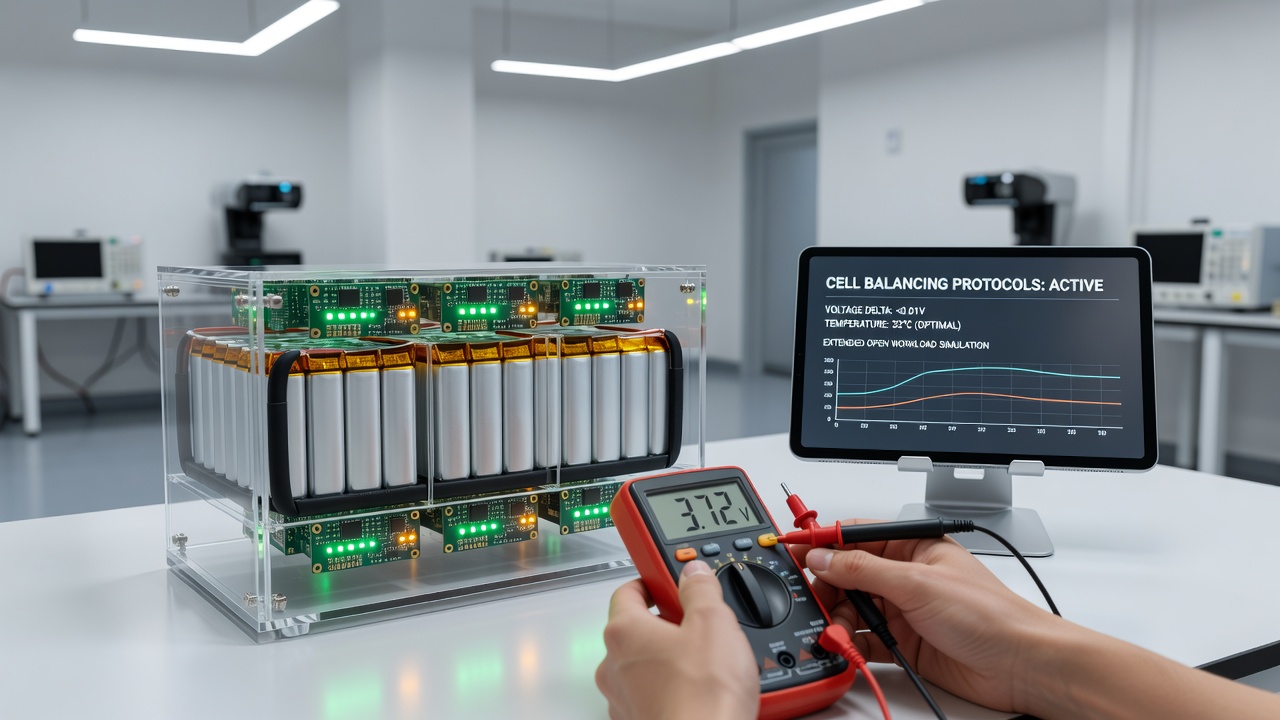
Thermal management ties directly into balancing protocols because temperature gradients across cells accelerate imbalance, and firmware algorithms adjust charge transfer rates based on readings from multiple sensors placed along the battery assembly. In October 2026 several handheld models introduced updated balancing firmware that incorporates predictive load modeling derived from game telemetry, allowing preemptive energy redistribution ahead of anticipated performance spikes. Those updates build on earlier passive systems by adding selective active balancing phases that activate only during idle menus or cutscenes to minimize heat buildup during active play.
Protocol Variations Across Handheld Platforms
Different manufacturers select balancing strategies according to pack size, cost targets, and thermal constraints, with some opting for resistor-based passive methods in entry-level devices while flagship models incorporate switched-capacitor active circuits for superior efficiency. Voltage monitoring occurs through dedicated analog front-end chips that communicate with the main system-on-chip, and these chips report real-time data to user interfaces that display estimated remaining session time adjusted for current balancing activity. Figures from a 2026 joint study by North American and Asian research teams indicate that platforms using hybrid balancing protocols experience 30 percent fewer mid-session interruptions compared with single-method implementations under equivalent exploration workloads.
Software layers further refine hardware protocols by logging historical imbalance patterns and adapting thresholds for individual user habits, such as frequent fast-travel usage or extended idle periods in menus. This adaptive approach keeps cell voltages aligned even when play styles introduce irregular discharge curves common in open-world environments with variable enemy density and terrain complexity. Observers note that such refinements appear more frequently in devices released after mid-2025 as component costs for active balancing circuitry continue to decline.
Conclusion
Cell balancing protocols form a foundational element in sustaining consistent performance from handheld device batteries across extended open-world exploration sessions by equalizing charge states and preventing premature capacity loss. Implementation details vary by platform yet share the common goal of maximizing usable energy while protecting cell health over hundreds of cycles. Recent firmware advances scheduled for broader deployment in late 2026 continue to refine these systems through predictive algorithms and improved thermal integration, and data collected from field deployments support ongoing refinement of balancing thresholds tailored to the unique load profiles of modern handheld gaming hardware.